Home / Discover
KNOW
Discover
The places of worship, Kikoe-Okimi and the Oaraori, and the connection with Kudaka Island. A place to know Sefa-utaki one step deeper.
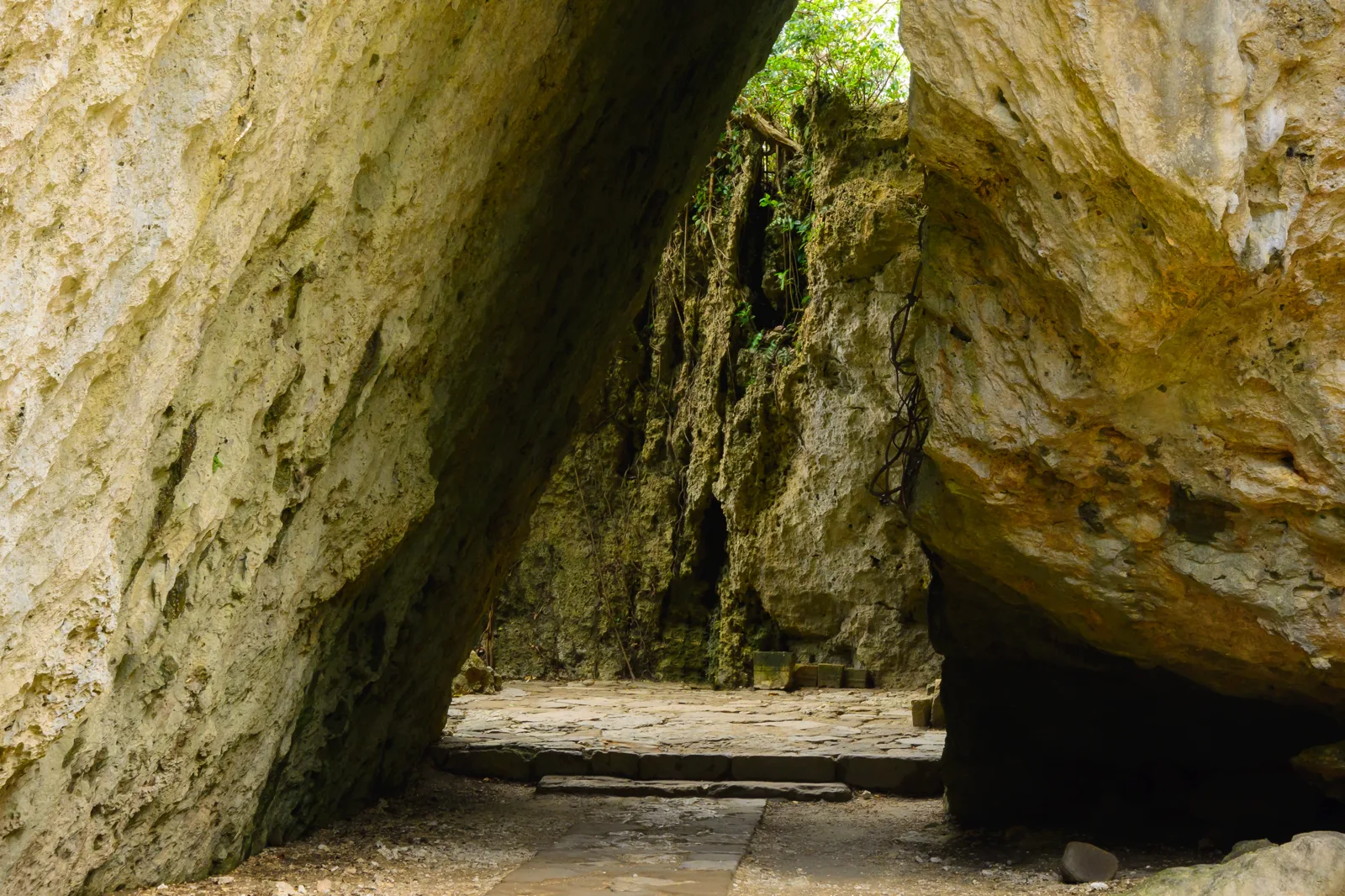
The places of worship
The path through the utaki begins at the entrance called Ujoguchi. Climbing the stone-paved slope, you come to the places of worship Ufugui and Yuinchi. Ufugui means "great hall" and Yuinchi "kitchen" — both named after facilities within Shurijo Castle. Yuinchi is understood not as a place where cooking was actually done, but as a place to pray for abundance to gather. At the far end of the path is Sangui. Entry into the inner part of Sangui is currently not permitted.
Kikoe-Okimi and the Oaraori
Kikoe-Okimi was the highest priestess of the Ryukyu Kingdom. A woman of the royal family held the office, praying to the gods for the prosperity of king and country, rich harvests and safe voyages. Her investiture rite was the Oaraori. The procession left Shuri and travelled by way of Haebaru and Sashiki down to this land of Chinen. It is said that when she received the naming rite at Ufugui in the utaki, Kikoe-Okimi became equal to the gods, and afterwards songs of joy by the priestesses echoed through the utaki.
Kudaka Island and the Agari-umai
Sefa-utaki is also one of the stations of the Agari-umai, a pilgrimage route through the sacred places. In former times, the king and Kikoe-Okimi made prayers around the eastern sacred sites, centering on Sefa-utaki and Kudaka Island. Kudaka, floating in the eastern sea, is called "the island of the gods," and the sacred white sand used in the utaki is said to have been carried from this island. Kudaka remains a carefully protected sanctuary today; we ask you to turn your heart toward it quietly, from afar.